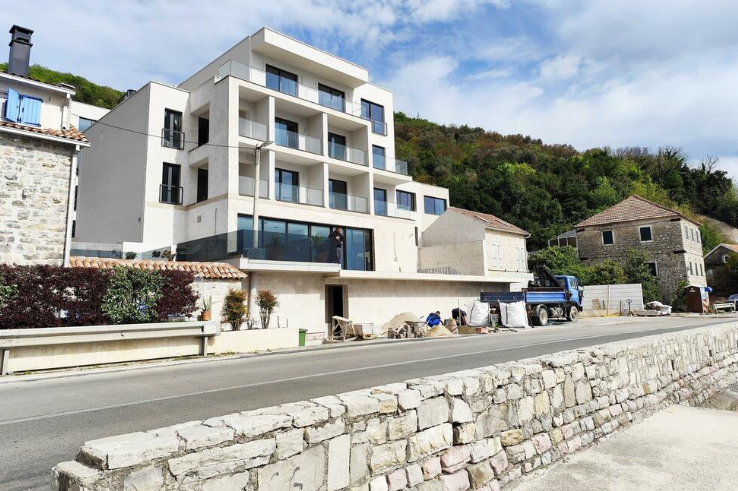
This case is important because it sits at the intersection of illegal-construction legalization, inspection enforcement, and the special protection regime connected with the Kotor UNESCO area and its protected surroundings. The case concerns a hotel object owned by Gugi Commerce in Opatovo, Tivat. According to the officially published act, the Administration for the Legalization of Illegal Structures issued decision No. 01-24-19 of 16 March 2026, and the act was published on gov.me on 26 March 2026. Available sources state that the legalized part covered 2,274.78 m², while the Ministry said the application had been forwarded by the Municipality of Tivat to the state level on 17 February 2026.
The sensitivity of the case lies in the fact that the legalization procedure ran alongside earlier enforcement and criminal-law issues. Tivat police filed a criminal complaint on 19 February 2024 against Branislav Savić and Gugi Commerce over illegal construction in Donja Lastva. Later, the Basic State Prosecutor’s Office in Bar confirmed that the case had been formed there and remained in the inquiry phase. The Ministry also stated that construction inspection had previously issued bans on further works and demolition orders regarding parts of the object, and that works had continued despite those earlier measures.
The legal framework became stricter at the end of March. Amendments to the Law on the Protection of the Natural and Cultural-Historical Area of Kotor, published in Official Gazette of Montenegro No. 33/2026, entered into force on 28 March 2026. Those amendments provide that ongoing legalization procedures for illegally built objects in the Kotor area and its protected surroundings must be suspended until the adoption of the Management Plan and the Protection Study.
The practical conclusion is precise: this is not a story about a new pro-legalization rule or a general easing of the regime. It is, above all, a case showing how decisive the timing of an administrative decision can be. Here, the legalization decision was issued on 16 March 2026, which was before the new Kotor/UNESCO-related restrictions took effect on 28 March 2026. That is why this case matters as an example of how the general legalization regime, inspection enforcement, prosecutorial inquiry, and a special protection regime can collide in one file.
The sensitivity of the case lies in the fact that the legalization procedure ran alongside earlier enforcement and criminal-law issues. Tivat police filed a criminal complaint on 19 February 2024 against Branislav Savić and Gugi Commerce over illegal construction in Donja Lastva. Later, the Basic State Prosecutor’s Office in Bar confirmed that the case had been formed there and remained in the inquiry phase. The Ministry also stated that construction inspection had previously issued bans on further works and demolition orders regarding parts of the object, and that works had continued despite those earlier measures.
The legal framework became stricter at the end of March. Amendments to the Law on the Protection of the Natural and Cultural-Historical Area of Kotor, published in Official Gazette of Montenegro No. 33/2026, entered into force on 28 March 2026. Those amendments provide that ongoing legalization procedures for illegally built objects in the Kotor area and its protected surroundings must be suspended until the adoption of the Management Plan and the Protection Study.
The practical conclusion is precise: this is not a story about a new pro-legalization rule or a general easing of the regime. It is, above all, a case showing how decisive the timing of an administrative decision can be. Here, the legalization decision was issued on 16 March 2026, which was before the new Kotor/UNESCO-related restrictions took effect on 28 March 2026. That is why this case matters as an example of how the general legalization regime, inspection enforcement, prosecutorial inquiry, and a special protection regime can collide in one file.